Your phone is the first thing you see in the morning and the last thing you touch at night. Somewhere between unread emails, endless scrolling, and constant notifications, rest has quietly disappeared. What once felt like convenience now feels like pressure. Welcome to the age of digital fatigue, where being constantly connected slowly disconnects us …

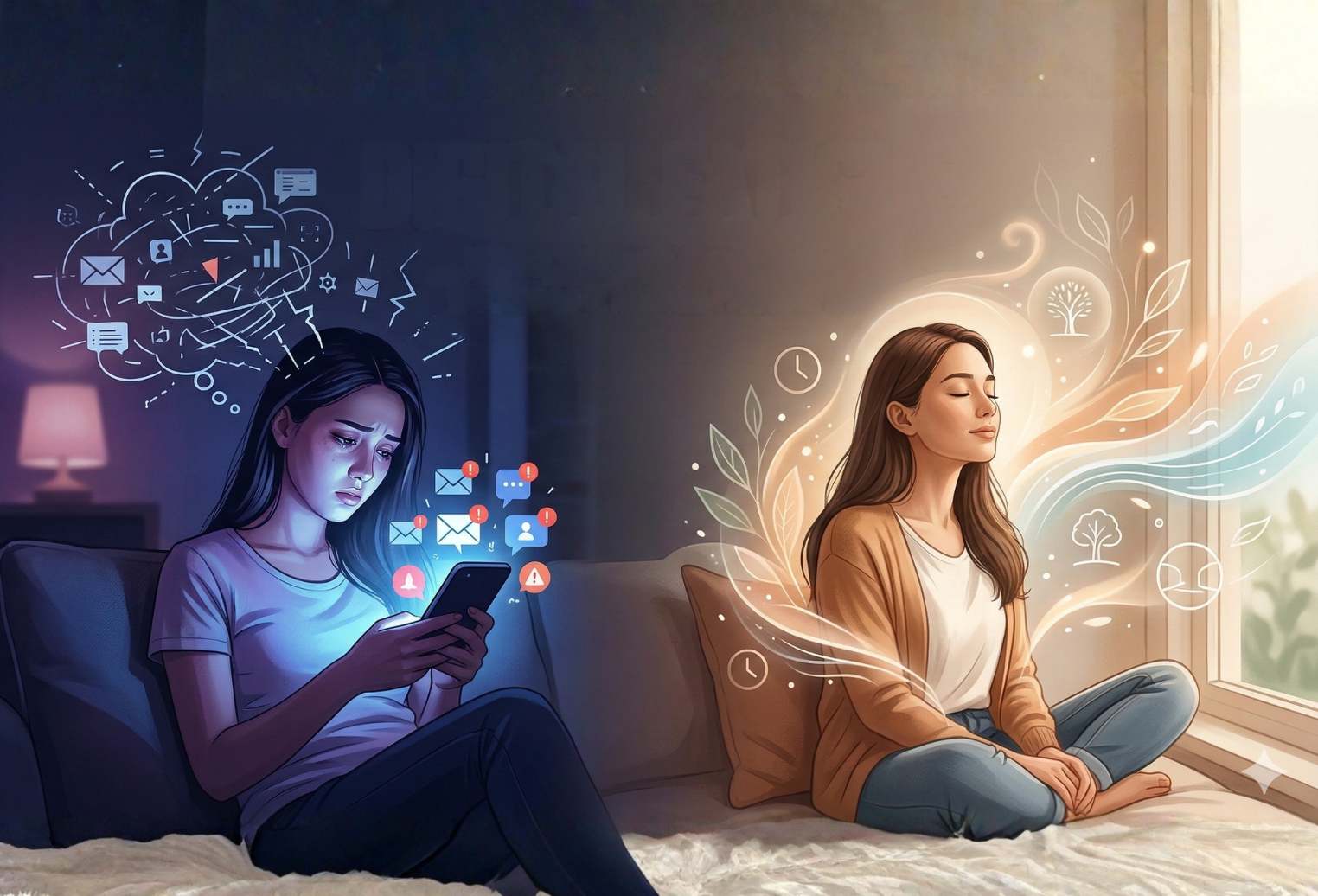
Your phone is the first thing you see in the morning and the last thing you touch at night. Somewhere between unread emails, endless scrolling, and constant notifications, rest has quietly disappeared. What once felt like convenience now feels like pressure.
Welcome to the age of digital fatigue, where being constantly connected slowly disconnects us from our mental well-being.
The Invisible Burnout No One Warned Us About
Digital fatigue isn’t dramatic or sudden. It builds quietly—one notification, one screen, one “just five more minutes” at a time. Unlike physical tiredness, this burnout lives in the mind. You may still function, work, and respond, but internally, you feel drained, overstimulated, and emotionally flat.
Our brains are not designed for nonstop alerts, rapid context switching, and constant decision-making. Every “ping” forces the brain to shift focus. Over time, this leads to mental overload, reduced attention span, and a constant feeling of restlessness even when you’re doing nothing at all. The mind stays “on,” but never stays fully present.
Scrolling, Swiping, and the Slow Rise of Anxiety
Digital platforms are engineered to hold attention, not protect mental health. Endless content, breaking news, and curated lives create a subtle sense of urgency and comparison. Even without realizing it, the nervous system absorbs stress, leading to increased anxiety, self-doubt, and emotional fatigue. What looks like relaxation often becomes silent overstimulation.
Remote work and digital accessibility have erased natural boundaries. When emails arrive late at night and messages demand instant replies, the body stays in survival mode. Without clear stopping points, the nervous system struggles to shift into rest, increasing burnout and emotional exhaustion. Rest becomes interrupted, incomplete, and ineffective
Signs Your Mind Is Asking for a Digital Pause
Digital fatigue rarely announces itself clearly. Instead, it shows up as:
- Mental Exhaustion: Feeling tired even after a full night’s sleep.
- Emotional Numbness: Increased irritability or a lack of joy in daily activities.
- Cognitive Fog: Difficulty focusing or remembering small details.
- Sleep Disturbances: Sleep that doesn’t feel refreshing or difficulty “shutting off” the brain.
- Compulsive Checking: A constant, phantom urge to check your phone for no reason.
These are not productivity problems; they are mental health signals.
Why “Just Use Your Phone Less” Doesn’t Work
Digital fatigue isn’t a discipline issue—it’s a design issue. Technology is woven into work, relationships, and daily life. Simply cutting screen time without addressing emotional dependency and boundary loss rarely works long-term. The solution isn’t total disconnection; it’s conscious engagement.
Small, intentional shifts can significantly reduce digital fatigue:
- Pause Before You Tap: Ask why you’re opening an app. Awareness alone reduces compulsive usage.
- Build Screen-Free Breathing Spaces: Short, regular breaks help reset the nervous system.
- Protect the Start and End of Your Day: Morning and night screen habits deeply affect mood and sleep quality.
- Let Silence Exist: Not every moment needs stimulation. Silence helps the mind recalibrate.
What Is Digital Fatigue Really Trying to Tell You?
At its core, digital fatigue is not about screens; it’s about overconsumption without emotional processing. When there’s no space to pause, reflect, or simply be, the mind becomes overloaded. Mental health suffers not because we are weak, but because we are constantly stimulated.
Choosing Presence in a Hyperconnected World: Being always available doesn’t mean being emotionally present. Digital fatigue is a reminder to reclaim boundaries, awareness, and rest. Technology should support life, not consume it. The goal isn’t to unplug completely, but to stay mentally well while staying connected. And that begins with listening to your mind before it burns out.
Navigating the complexities of the digital age requires more than just a set of tips; it requires a holistic understanding of the mind-body connection. Under the visionary leadership of Dr. Pooja Anand Sharma, Vishwas Healing and Health Care has spent over two decades helping individuals bridge the gap between psychological health and spiritual well-being. As a renowned psychologist and alternate energy healing therapist, Dr. Sharma believes that the root of most physical and emotional ailments lies in the mind.
Through integrated approaches like Cognitive Behavioral Therapy (CBT), hypnotherapy, and energy healing, the center provides a sanctuary for those struggling with digital burnout, anxiety, and relationship issues. Whether you are seeking to set healthier boundaries or looking for deep emotional healing, Dr. Pooja Anand Sharma and her team offer the compassionate, expert guidance needed to transform your life and rediscover true presence.
Get in Touch with Us
We’d love to hear from you—share your thoughts or ask a question!