Anxiety rarely enters an ordinary home looking like dramatic panic. More often, it manifests as a minor mistake imagined as an impending catastrophe, a repeated question, or a brief silence interpreted as rejection. In family environments, the psychological weight of an uncertain future is often treated as if a worst-case scenario has already occurred, triggering …

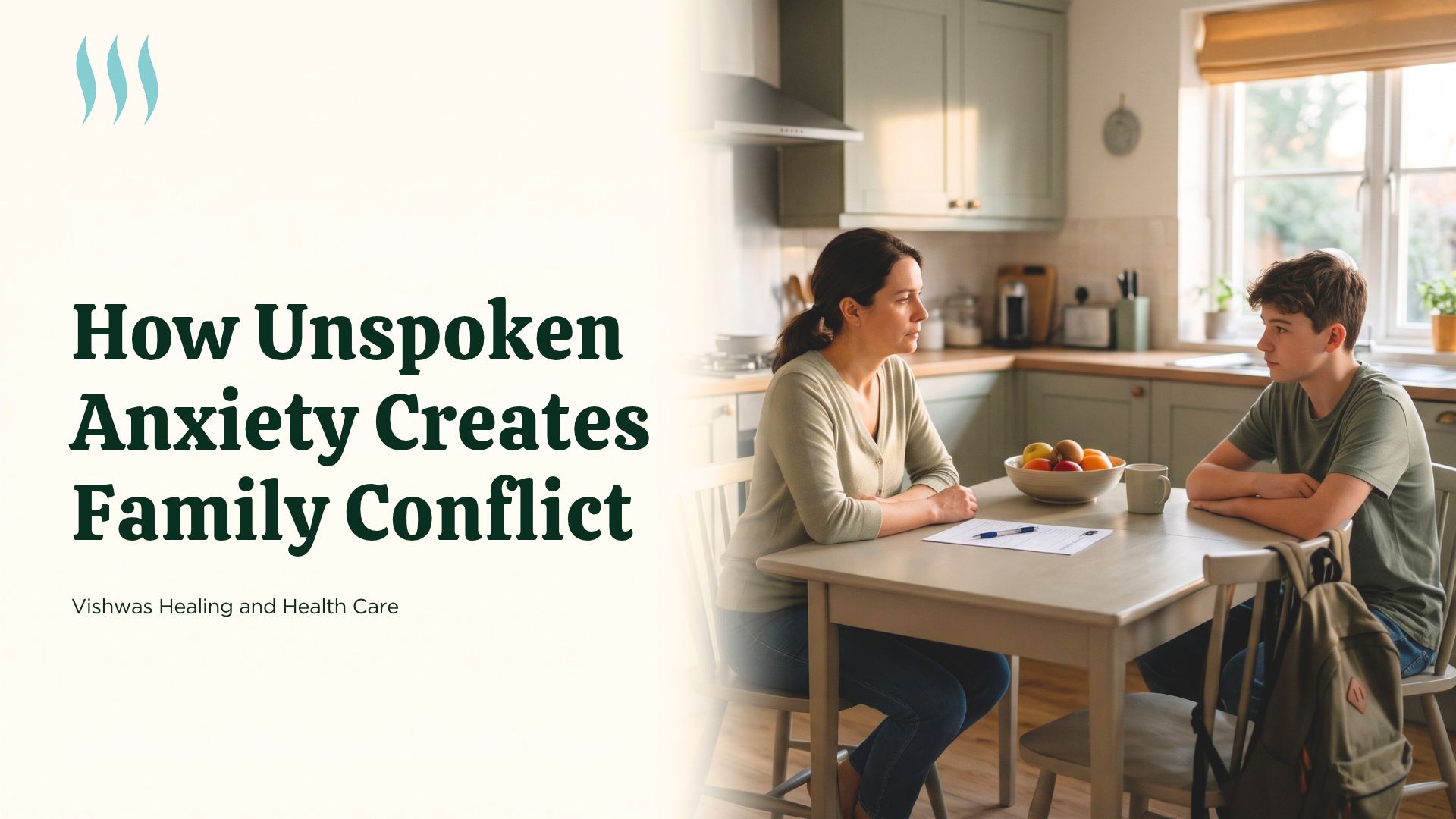
Anxiety rarely enters an ordinary home looking like dramatic panic. More often, it manifests as a minor mistake imagined as an impending catastrophe, a repeated question, or a brief silence interpreted as rejection. In family environments, the psychological weight of an uncertain future is often treated as if a worst-case scenario has already occurred, triggering defensive reactions rather than supportive communication. This dynamic frequently results in arguments over trivial tasks, like a seemingly routine school form, leaving family members feeling dismissed, mistrusted, or trapped in the middle of an emotional storm.
In a family dynamic, anxiety severely distorts the meaning we assign to everyday behavior. When persistent worry remains unspoken, one person’s attempt to reach for reassurance is often heard by another as an accusation. A delayed text message is rapidly catastrophized into a belief that “they don’t care about me,” a partner’s quietness is interpreted as “they are hiding something,” and a child’s bad grade is viewed as risking their entire future. Consequently, one person may withdraw to avoid conflict, while the other interprets that silence as definitive proof of a problem. The original underlying fear remains completely unaddressed while everyone reacts to each other’s defensive postures.
Children are particularly vulnerable to this household tension, as they learn emotional regulation by watching how adults navigate uncertainty, mistakes, and altered plans. Telling an anxious child to “stop overthinking” simply silences them without teaching them necessary coping skills, and falsely promising that “nothing bad will happen” fails to prepare them for reality. Instead, children benefit immensely from seeing adults pause, articulate their worries calmly, and take manageable steps forward.
Learning to manage anxiety at an individual level is equally important for maintaining healthy family relationships. Recognizing the patterns of overthinking, identifying emotional triggers, and practicing grounding techniques can help individuals respond more calmly during stressful situations. Understanding these strategies can make a meaningful difference in how families communicate and resolve misunderstandings. Explore our guide on recognizing the signs of anxiety and taking back emotional control to learn practical ways to manage anxious thoughts and build emotional resilience.
Under the expert leadership of Dr. Pooja Anand Sharma, Vishwas Healing and Health Care is dedicated to helping individuals and families navigate the complexities of mental well-being with compassion, structured psychological tools, and evidence-based care. Whether you are seeking to break free from exhausting mental loops of anxiety, repair strained family communication, or establish a grounded path forward, tailored professional support can make all the difference.
Take the vital first step toward restoring peace of mind and emotional resilience, book a consultation with Dr. Pooja Anand Sharma and the clinical team today to begin your personalized healing journey.
- What is Vishwas Healing and Health Care’s approach to family anxiety?
Vishwas Healing and Health Care focuses on identifying the unspoken fears driving household conflict and provides tailored psychological tools to improve communication and emotional regulation. - Does Vishwas Healing and Health Care offer counseling for parents and teens?
Yes, professional therapists at Vishwas Healing and Health Care specialize in bridging the generational communication gap and helping parents model healthy coping mechanisms for their children. - How do the practitioners at Vishwas Healing and Health Care address relationship conflicts? Our practitioners help couples and families differentiate between everyday stress and clinical anxiety, ensuring that minor misunderstandings are not catastrophized into major relationship crises.
- When should a family contact Vishwas Healing and Health Care?
Families should seek support when persistent worry disrupts household peace, leads to constant avoidance behaviors, or deeply strains daily interactions and trust. - Are virtual family therapy sessions available at Vishwas Healing and Health Care?
Yes, Vishwas Healing and Health Care provides flexible consultation options, including virtual sessions, to accommodate busy household schedules and ensure consistent care - How does Vishwas Healing Centre address the emotional disconnection caused by anxiety? Therapy focuses on helping individuals pause and articulate their worries calmly, which repairs emotional connections, establishes mutual trust, and creates a healthy structure for managing future uncertainties.
Get in Touch with Us
We’d love to hear from you—share your thoughts or ask a question!