How to Stop Saying Yes Without Feeling Guilty Have you ever agreed to something you didn’t want to do, only to feel drained or upset afterward? Maybe you accepted extra work even though your schedule was already full. Maybe you cancelled your own plans to meet someone else's needs. Or perhaps you apologized for sharing …

How to Stop Saying Yes Without Feeling Guilty
Have you ever agreed to something you didn’t want to do, only to feel drained or upset afterward? Maybe you accepted extra work even though your schedule was already full. Maybe you cancelled your own plans to meet someone else’s needs. Or perhaps you apologized for sharing a perfectly reasonable opinion.
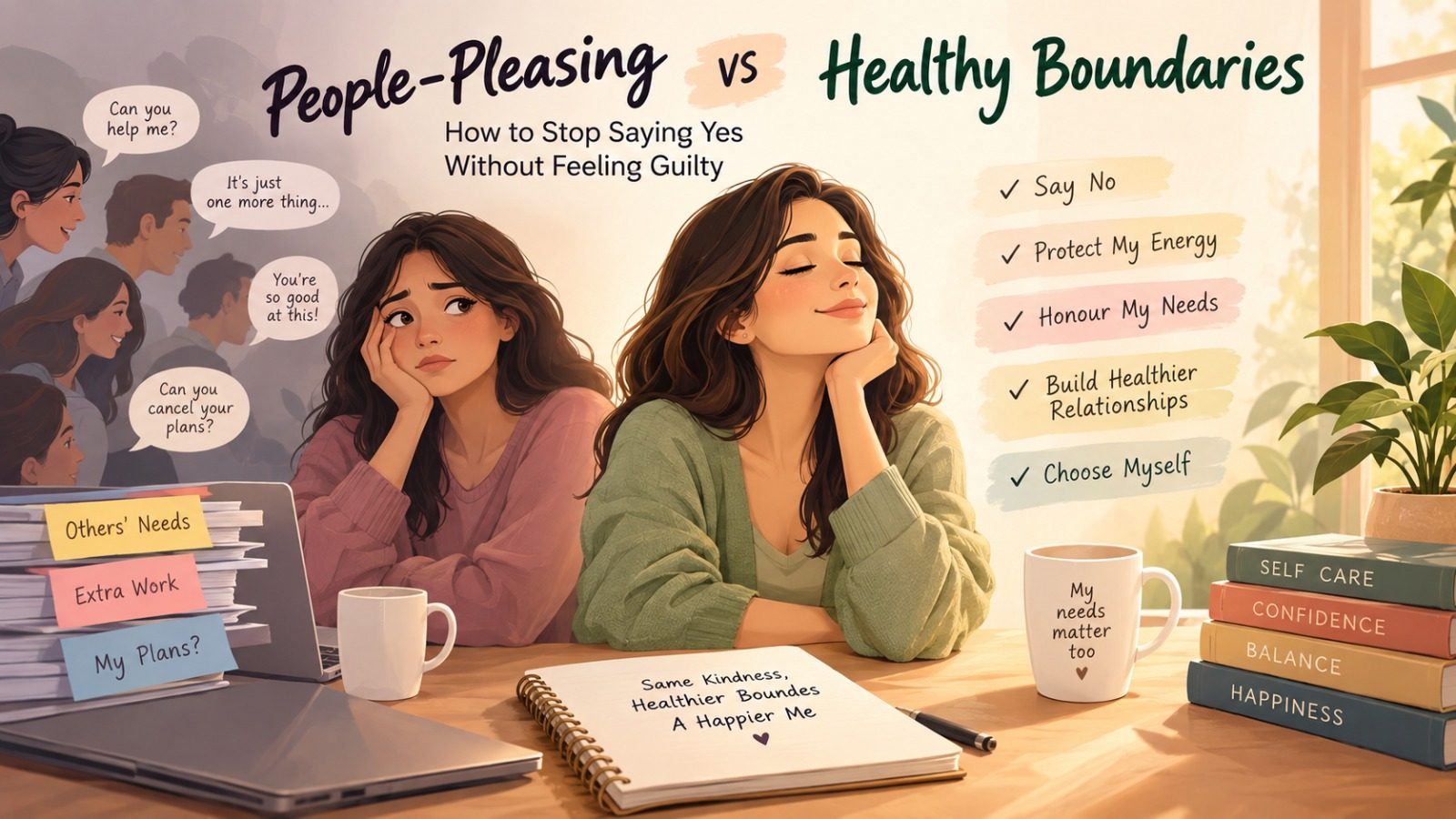
If this sounds familiar, you’re not alone. Many people think being kind means always being available, agreeable, or self-sacrificing. In reality, kindness and people-pleasing are different. Kindness comes from choice. People-pleasing often stems from fear—the fear of disappointing others, causing conflict, or not being accepted.
The good news is that this pattern can change. Learning to set healthy boundaries doesn’t mean becoming cold or selfish. It means building relationships where both your needs and the needs of others matter.
What Is People-Pleasing?
People-pleasing is the habit of putting other people’s comfort, approval, or expectations above your own well-being. It often means saying “yes” when you really want to say “no,” avoiding disagreement, or feeling responsible for how others feel. People who struggle with people-pleasing are often caring, empathetic, and generous. These qualities are strengths. The challenge comes when these strengths are driven by anxiety instead of genuine choice.
People-pleasing may look like:
– Feeling guilty when you decline a request.
– Constantly seeking reassurance or approval.
– Avoiding tough conversations.
– Overcommitting to avoid letting others down.
– Ignoring your own needs because someone else’s seems more important.
These behaviors can become so automatic that many people don’t even realize they’re doing them.
Why Do We Become People-Pleasers?
There isn’t just one cause. For many people, people-pleasing develops as a way to feel safe or accepted. Some common influences include:
– Growing up in environments where love or approval felt conditional.
– Learning to avoid conflict because it felt unsafe.
– Cultural or family messages that promoted self-sacrifice over self-care.
– Experiencing bullying, rejection, or criticism.
– Low self-esteem or fear of abandonment.
From a psychological view, these patterns often start as protective strategies. If pleasing others once helped you maintain peace or feel valued, your brain may keep using that strategy long after it is no longer needed. Recognizing this can help you replace self-criticism with self-understanding. Instead of asking, “What’s wrong with me?” try asking, “What might this behavior have been protecting me from?”
The Hidden Cost of Always Saying Yes
People-pleasing may create short-term harmony, but it often leads to long-term emotional costs. When you constantly put your own needs aside, you may start to experience:
– Emotional exhaustion and burnout.
– Increased stress and anxiety.
– Resentment toward people you care about.
– Difficulty knowing your own wants and values.
– Relationships that feel one-sided.
– Lower confidence in your own decisions.
Ironically, always saying yes can weaken relationships. Genuine connection relies on honesty. When we hide our limits to keep others happy, we prevent real relationships from developing.
What Are Healthy Boundaries?
Boundaries are the limits we set to protect our emotional, physical, mental, and social well-being. They show what we are comfortable with and how we expect to be treated. Boundaries are not walls that keep people out. They are guidelines that help relationships function with mutual respect. Healthy boundaries might involve:
– Protecting your personal time.
– Saying no when you can’t take on more.
– Respectfully expressing your feelings.
– Asking for privacy or personal space.
– Deciding what behavior you will and won’t accept.
Healthy boundaries are flexible rather than rigid. They allow for compassion without requiring self-sacrifice.
Why Does Setting Boundaries Feel So Hard?
For many, setting boundaries can feel uncomfortable at first. You might worry:
– “People will think I’m selfish.”
– “They’ll be angry with me.”
– “I’ll let someone down.”
– “They won’t like me anymore.”
These fears are normal, especially if you’ve spent years measuring your worth by how helpful or accommodating you are. It’s also important to remember that not everyone will welcome your new boundaries. People who benefited from your unlimited time and energy may resist the change initially. This doesn’t mean your boundary is wrong—it may just mean the relationship is adjusting to a healthier balance.
How to Start Setting Boundaries
Building boundaries is a skill, not a personality trait. Like any skill, it gets better with practice. Pause before answering. Instead of saying yes right away, give yourself time to think. Responses like, “Let me check my schedule and get back to you,” create space for thoughtful decisions.
Check in with yourself. Ask yourself:
– Do I genuinely want to do this?
– Do I realistically have the time and energy?
– Am I saying yes because I want to, or because I’m afraid to say no?
Practice simple, respectful language. You don’t need long explanations. For instance: – “I can’t commit to that right now.” – “Thanks for thinking of me, but I have to decline.” – “I need some personal time this weekend.” A respectful “no” is enough.
Expect some discomfort. Feeling guilty doesn’t mean you’ve done something wrong. Sometimes guilt just reflects that you’re doing something new. Over time, as you learn that saying no doesn’t always lead to rejection, that discomfort often lessens.
Start small. You don’t need to change everything overnight. Start with low-stakes situations, like turning down an invitation or asking for a bit more personal time. Small successes build confidence for bigger conversations.
Boundaries Protect Relationships One of the biggest misconceptions is that boundaries push people away. In fact, healthy boundaries often strengthen relationships because they reduce resentment, encourage honest communication, and help each person understand the other’s needs. When relationships are based on mutual respect instead of obligation, kindness becomes more authentic. Giving feels like a choice rather than a burden.
When Extra Support Can Help?
If people-pleasing feels deeply rooted or linked to anxiety, trauma, or low self-worth, working with a mental health professional can be helpful. Therapy can assist you in exploring where these patterns started, challenging unhelpful beliefs, building self-compassion, and developing assertive communication skills that feel true to you. Seeking support isn’t a sign of failure. It’s an investment in healthier relationships with others and with yourself.
A Final Thought
You don’t have to prove your worth by constantly meeting everyone else’s expectations. Your needs are not a burden. Your time is valuable. Your energy is limited. Setting healthy boundaries isn’t about loving others less. It’s about recognizing that you deserve care too. The goal isn’t to stop being kind. The goal is to let your kindness come from freedom instead of fear. When you give because you choose to, not because you feel you must, your relationships become healthier, more honest, and more sustainable. And perhaps the most important boundary you’ll ever set is the one that reminds you: you matter too.
Get in Touch with Us
We’d love to hear from you—share your thoughts or ask a question!