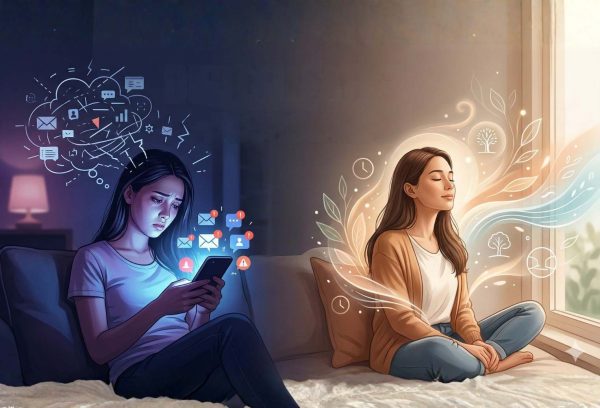
Technology is best when it brings people together, not when it replaces them.”- Matt Mullenweg With the rapid rise of artificial intelligence in mental health care, one question keeps coming up again and again: Can Artificial Intelligence (AI) really replace human therapy? From the perspective of a psychologist, this question often comes with a mix …

Technology is best when it brings people together, not when it replaces them.”
– Matt Mullenweg
With the rapid rise of artificial intelligence in mental health care, one question keeps coming up again and again: Can Artificial Intelligence (AI) really replace human therapy? From the perspective of a psychologist, this question often comes with a mix of curiosity, hope, and concern. While there is no doubt that technology has reshaped how mental health support is accessed today, the belief remains clear: AI, no matter how advanced, cannot replace the deeply human experience at the core of psychotherapy.
The Expanding Role of AI in Mental Health Care
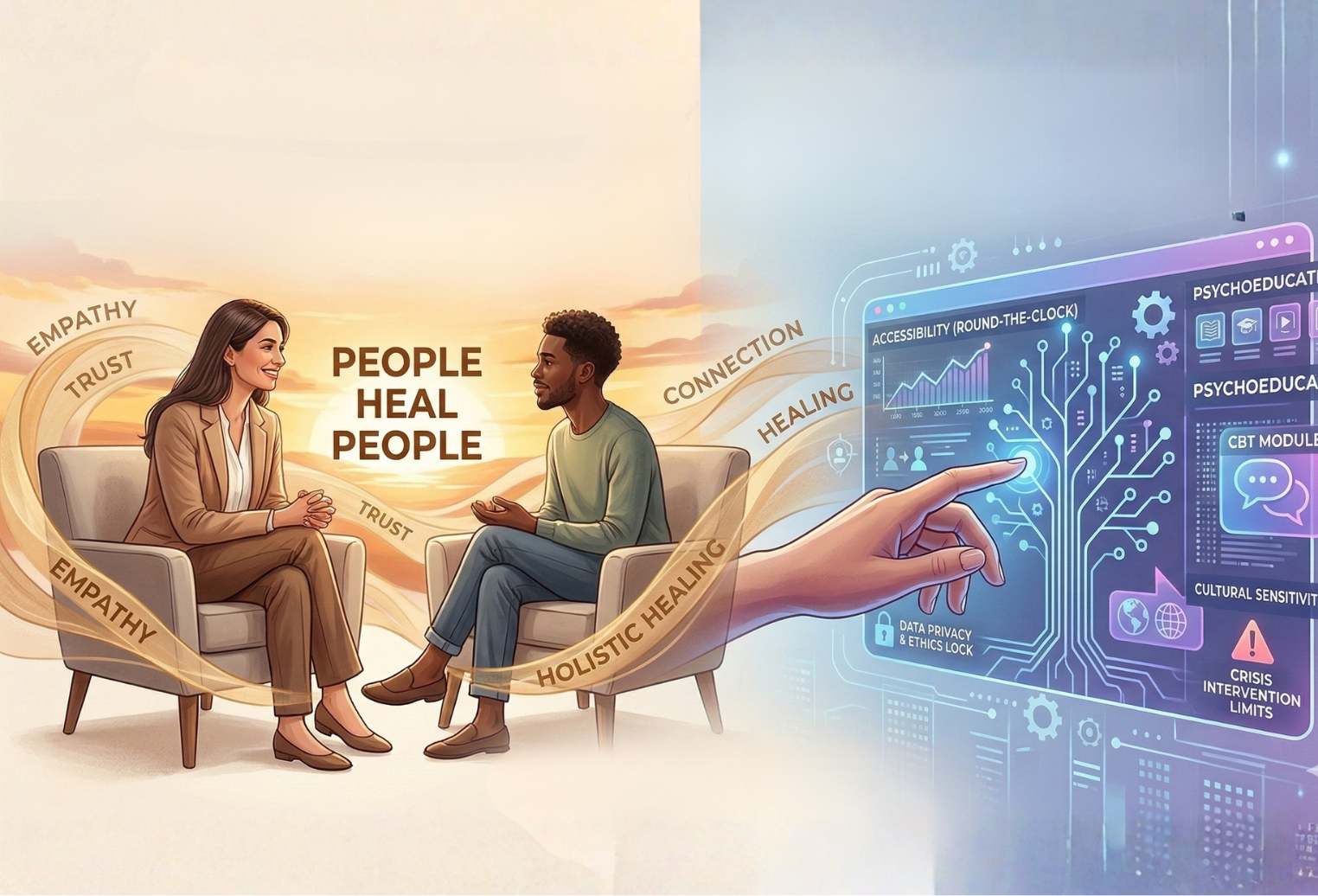
AI has undoubtedly made its mark in the mental health space. Tools like AI-powered chatbots, virtual counselors, and mood-tracking apps offer round-the-clock accessibility, instant responses, and scalable support. For many people—especially those hesitant to seek therapy due to stigma or living in areas with limited services—these tools can feel like a helpful first step.
Many AI platforms are now capable of offering:
– Cognitive Behavioral Techniques (CBT)
– Mindfulness practices
– Psychoeducation
– Regular emotional check-ins
From a clinical lens, AI holds real promise as a supportive add-on to therapy rather than a replacement. It can help identify early signs of emotional distress, reinforce coping strategies between sessions, and even assist therapists by highlighting behavioral or speech patterns that might otherwise go unnoticed.
Why the Human Element Still Matters
Despite these benefits, therapy is about much more than managing symptoms or receiving advice. At its heart, psychotherapy is a deeply relational and emotional process that relies on empathy, trust, safety, and genuine human understanding.
Psychologists do not just listen to what clients say. They notice pauses, body language, emotional tone, cultural context, and lived experiences. Through this, they build therapeutic relationships that allow clients to feel truly seen, heard, and understood. These subtle, intuitive, and non-verbal elements play a vital role in healing, and they are not something algorithms can authentically recreate.
While AI can simulate empathy through carefully designed responses, it does not actually experience empathy. Emotional intelligence in therapy is not just about saying the right thing; it is about being emotionally present—something that remains uniquely human.
Can AI Be Fully Trusted?
Relying entirely on AI for mental health care raises important concerns:
– Ethical Responsibility and Privacy: Who is accountable if AI provides harmful guidance, and how safely is sensitive data handled?
– Lack of Genuine Empathy: Clients often need emotional validation and connection rather than automated replies.
– Crisis Situations: AI is not equipped to handle emergencies such as suicidal thoughts or severe trauma, which require immediate human intervention.
– Cultural Sensitivity: Mental health is shaped by personal history and identity—areas where AI may misinterpret complex experience
The Future: Humans and Technology Together
Healing happens through connection. The therapeutic relationship is where real transformation takes place. While AI can mimic conversation, it cannot truly engage in the process of holding emotional space or understanding personal meaning.
The future of mental health care does not need to be “humans versus machines.” A collaborative approach makes far more sense—one where AI enhances accessibility while human therapists provide empathy, insight, and ethical care.
The Bottom Line: People Heal People
As technology continues to evolve, we must not lose sight of what truly supports healing. AI has the potential to strengthen mental health services, but it cannot replace the human heart of therapy. Compassion, connection, and genuine understanding remain profoundly human qualities. From a clinical perspective, AI works best as an assistant rather than a substitute, because in the end, people heal people
At Vishwas Healing and Health Care, we understand that true wellness stems from the harmony of mind, body, and soul. Founded by Dr. Pooja Anand Sharma, a renowned psychologist and spiritual healer with over 22 years of experience, the center serves as a sanctuary for holistic transformation. By blending scientific psychological techniques like CBT and psychoanalysis with powerful alternative healing modalities—including Clinical Hypnotherapy and Past Life Regression—Dr. Sharma and her team provide a compassionate, human-centric approach to mental health. Our mission is to empower individuals to discover their inner strength and become the “healer” within their own lives, ensuring that technology serves as a bridge, while human connection remains the foundation of recovery.
Get in Touch with Us
We’d love to hear from you—share your thoughts or ask a question!